March 26, 2026
Best Time of Year to Rent an Exotic Car: Season-by-Season Pricing Analysis

By Colin Greig
Founder & Editor-in-Chief
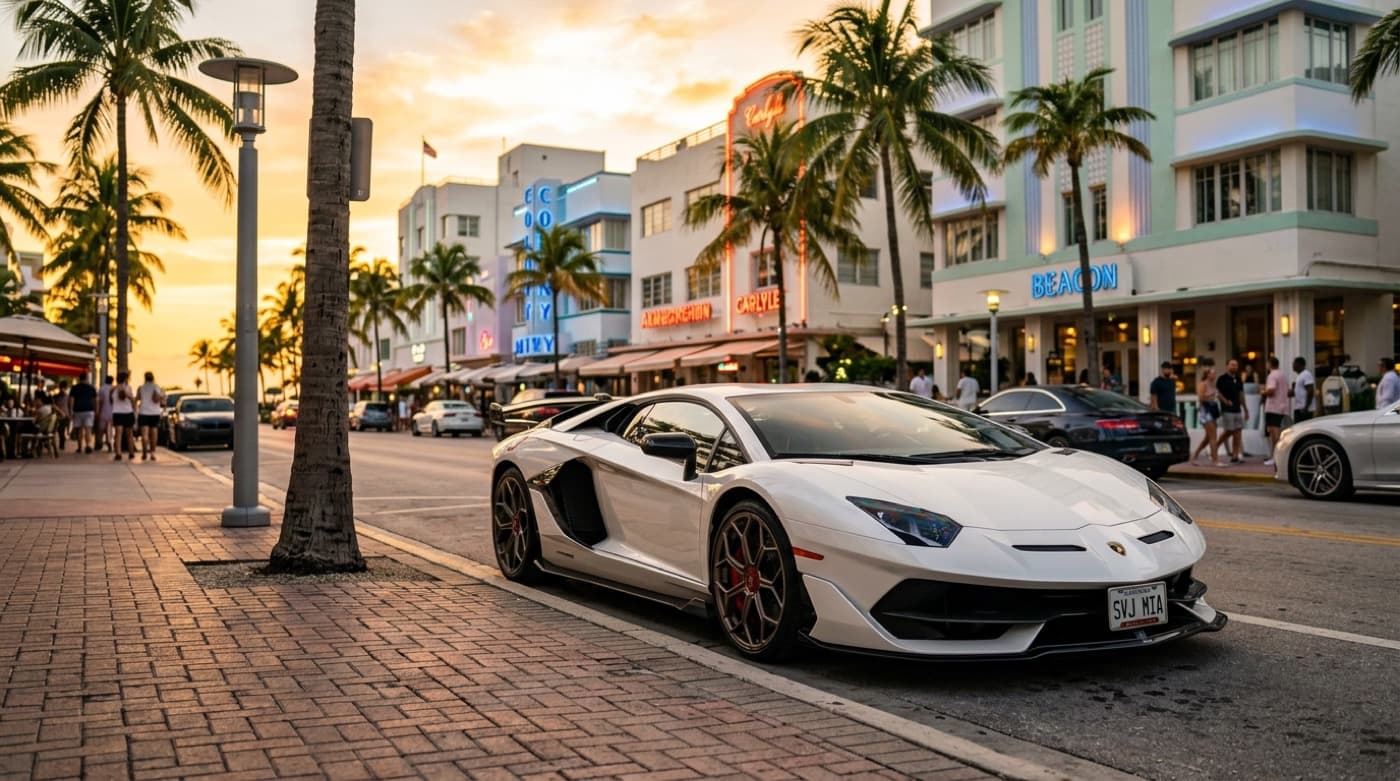
The sticker rate you see on a listing is not what you'll pay most weeks of the year. In Miami, a Lamborghini Huracán lists for $1,600/day — but during Art Basel week in December, that same car from the same operator costs $2,240. In Las Vegas, a Rolls-Royce Ghost at $2,200/day becomes $3,800/day the weekend of a major boxing match. In Dubai, June and July rates are 25–30% lower than December because the city empties out in summer heat.
Understanding when exotic rental prices flex — and by how much — is worth several hundred dollars per rental day.
How Exotic Rental Pricing Actually Flexes
Exotic rental pricing is essentially dynamic pricing by another name. Operators don't always use algorithmic tools the way airlines do, but they're watching the same signals: local event calendars, competitor listings, and inventory fill rates.
Three mechanisms drive price changes:
Demand events. Formula One weekends, major music festivals, sporting events, art fairs, and holidays all create concentrated demand. Operators know this and price accordingly. The rate increase starts appearing 3–6 weeks before a known event.
Inventory pressure. When 80% of an operator's fleet is already booked for a given weekend, the remaining cars get priced higher. This is market mechanics. If you're booking last-minute into a full market, you pay for the scarcity.
Competitive floors. In markets with many operators — Miami, Vegas, LA, Dubai — operators watch each other's listed rates. Slow weeks create pricing pressure downward; busy weeks allow everyone to hold firm or increase.
The Four Pricing Tiers (Trough, Shoulder, Peak, Event)
It's useful to think in four tiers:
Trough — Lowest demand weeks of the year for a given market. Operators prefer booked cars to parked ones. Discounts of 15–30% below posted rates are negotiable. Some operators actively drop listed prices; others will discount on a direct conversation.
Shoulder — Normal operating weeks. Steady demand, no events, rates roughly match posted prices. This is the baseline you're planning against.
Peak — High season for that city. Demand is up, availability tightens, rates run 20–35% above shoulder pricing. Still available if you book 2–3 weeks out.
Event — A specific local event drives concentrated demand. 40–80% above shoulder pricing is typical. Las Vegas fight nights and Miami Music Week sit at the upper end of this range.
Trough Season by City (When to Book)
Each market has its own slow window:
Miami — September and early October. Summer heat and humidity have suppressed local leisure demand, hurricane season keeps tourist volumes lower, and Art Basel (December) is still months away. A Huracán that runs $1,600/day in December can dip to $1,100–$1,200/day in late September. A 3-day weekend rental saves roughly $1,000–$1,500 in real terms against peak pricing.
Las Vegas — January (excluding New Year's) and the second half of July. Vegas operates almost year-round, but post-holiday January sees a genuine dip. Operators who overstocked for New Year's are willing to move inventory. Summer heat reduces demand for open-top cars specifically.
Los Angeles — Late November before Thanksgiving, and most of February–March outside long weekends. LA doesn't have a strong seasonal trough due to year-round mild weather, but February is as close as it gets. Rates 10–20% below peak.
New York City — February is the clearest trough. Cold weather, no major events, and post-January bleakness keep demand compressed. A Manhattan Lamborghini that costs $2,600/day in May might be $1,800/day in mid-February.
Dubai — June through August. Summer heat regularly exceeds 45°C (113°F) and the local population leaves. Tourist volumes drop 40–50%. Operators who carry inventory year-round discount aggressively to cover costs. A Huracán at AED 4,000/day in February might go for AED 2,800/day in July. The driving experience is limited (no open roads in that heat without AC), but the rates are genuinely compelling for structured experiences.
London — November through February (excluding Christmas week). UK winters mean fewer driving days, which means operators are more flexible. A Lamborghini hire that runs £1,800/day in August can be £1,300/day in January.
Shoulder Season Sweet Spot
Shoulder pricing periods are the best value for most renters because you get reasonable availability without trough-level scrutiny on the car (which sometimes means older units or cars that need service — operators often pull their best inventory back to market as demand returns). Good shoulder windows:
- Miami: May–June, early October through mid-November
- Las Vegas: April, October–November
- Los Angeles: April, October
- Dubai: March, late October–November
- London: April–May, September
- Toronto: May–June, September
These windows offer shoulder pricing with warm weather (in most cases) and full fleet availability. They're the most underrated booking windows in exotic rentals.
Peak Season Avoidance Guide
Peak season doesn't mean "don't go" — it means know what you're paying and why.
Miami peak: December–January (Art Basel + snowbird season), March (spring break), Memorial Day weekend. Plan 30% above shoulder rates as a floor.
Las Vegas peak: New Year's Eve through January 3, Super Bowl weekend (even when hosted elsewhere — Vegas draws visitors regardless), March Madness, Halloween weekend. New Year's is the worst: some operators triple rates and require 5-day minimums.
Los Angeles peak: Memorial Day weekend, Fourth of July, Labor Day, Oscar weekend (February — a notable exception to the February trough elsewhere in LA specifically).
Dubai peak: November through February. December is the absolute peak: Dubai Shopping Festival, year-end travel, and maximum tourist volume coincide. AED 4,000/day cars go for AED 5,500–6,500/day.
London peak: July–August, Wimbledon fortnight, Formula One British Grand Prix weekend.
Event-Week Pricing: F1, Art Basel, Super Bowl, and More
Events create the sharpest pricing spikes. These are documented premiums from known operators in recent years:
| Event | Location | Typical Surge |
|---|---|---|
| F1 Miami Grand Prix (May) | Miami | +45–65% |
| F1 Las Vegas Grand Prix (Nov) | Las Vegas | +60–80% |
| Art Basel Miami Beach (Dec) | Miami | +35–50% |
| Super Bowl (rotating) | Host city | +40–60% |
| Coachella weekend 1 and 2 | Greater LA/Palm Springs | +30–45% |
| New Year's Eve | Las Vegas | +100–150% |
| Dubai Shopping Festival (Dec–Jan) | Dubai | +30–40% |
| Melbourne Cup week (Nov) | Melbourne | +25–40% |
| Cannes Film Festival (May) | Côte d'Azur area | +50–80% |
| Abu Dhabi Grand Prix (Nov) | Dubai/Abu Dhabi | +40–60% |
The F1 Las Vegas Grand Prix is the most extreme US event spike — a Lamborghini Huracán at $1,700/day on a normal November Wednesday goes for $2,800–$3,000/day the race weekend. Prices for that specific weekend are often locked in 2–3 months prior. Waiting to book a week out means you're either paying full event rate or you find nothing.
Miami Huracán prices jump roughly 40% during Art Basel week specifically. The week after Art Basel, rates drop back within 48 hours. If you can shift a Miami trip from December 6–12 to December 13–18, you save meaningfully.
Dubai Summer: The Exception Worth Knowing
June–August in Dubai is the counterintuitive value window for exotic rentals. While most markets raise prices in summer, Dubai drops them. The reason is structural: the emirate's resident population includes a large proportion of high-income professionals who leave for Europe during summer. Tourist arrivals decline sharply. Operators who run year-round inventory discount to cover overhead.
Practical considerations:
- Daytime driving is limited to early morning or after sunset
- AC-equipped cars only — avoid convertibles
- Indoors destinations (malls, restaurants, hotels) are all excellent
- For hotel-to-hotel or club-to-club use, summer in Dubai with a discounted supercar is a legitimate value proposition
AED 2,800/day for a Huracán that would cost AED 4,500/day in December is a genuine difference. For the right trip, it works.
How Far Ahead to Book
General booking windows by season type:
Trough season — 1–2 weeks ahead is fine, sometimes shorter. Operators aren't filling up.
Shoulder season — 2–3 weeks ahead for standard models. 3–4 weeks for GT3, SF90, 812 Superfast, or other scarce cars.
Peak season — 3–5 weeks minimum. For the best cars and best prices, 6–8 weeks out is smarter. The car you want will be available; the price is lower for early bookings from some operators.
Event weeks — 6–12 weeks ahead for F1, Art Basel, New Year's, and similar tier-1 events. Waiting until 2 weeks before an F1 Grand Prix means you're competing for whatever inventory remains at whatever price the operator decides to charge. For F1 Las Vegas Grand Prix specifically, some operators are fully booked by August for November.
The single biggest booking mistake: treating an exotic rental like a hotel room where prices drop last-minute due to unsold inventory. Exotic rentals do not work that way — last-minute availability is usually either the cars no one booked (for a reason) or the high-priced holds at full event rates. Book early, especially in competitive markets.
Browse our directory to find operators by city and compare real-time availability, or check specific markets like Miami exotic rentals, Las Vegas exotic rentals, or Dubai supercar hire for current pricing.